Teamwork begins with understanding: What we are taking away from our VIQ coaching
4 minutes
Jun 15, 2026
Good cooperation does not happen automatically just because you look after clients together, manage projects, and work towards deadlines. It happens when you recognize how differently people tick – how they think, make decisions, and communicate. And how they react when things get stressful.
We worked intensively on exactly this for two days – together with Stefan Ohde and Nicole Bidlingmaier from deepvelop – Institute for Sports and Psychology. The experts combine coaching, mental training, and personal development with a very practical look at what actually happens in teams.
The focus was on the Visual Questionnaire (VIQ®). Unlike classic questionnaires, this one works exclusively with visual stimuli. Personality profiles are not created through self-statements here, but through implicit reactions. The result: The test does not put anyone into a self-chosen drawer. It makes it tangible why colleagues experience the same situation completely differently, perceive information in a different way, and prioritize differently.
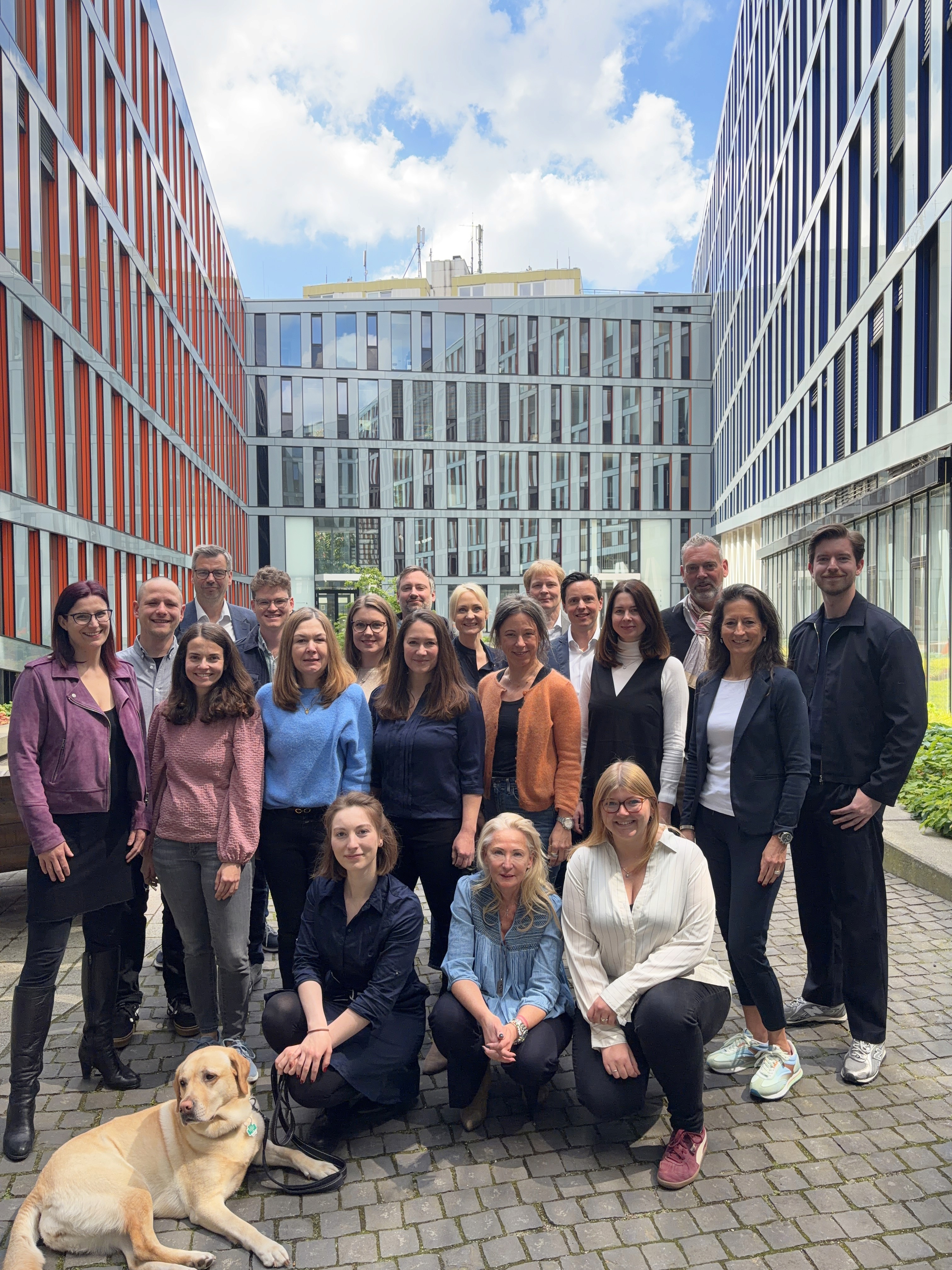
f.l.t.r.: Miriam Wolschon, Marcel Richters, Jasmin Müller, Dirk-Arne Walckhoff, Joel Jurkat Rodríguez, Kathrin Heider, Noemi Boettcher, Magda Janowiak, Isabella von Köckritz, Cristin Cron-Gürel, Sven Lindner, Hanna Dudenhausen, Sandra Landsfried, Sarah Sophie Rainer, Jörg Brans, Karsten Siegmund, Jasmin Macha, Arne Pflugrad, Julia Kramer, David Busch (Photo source: public imaging)
Naturally, many different ways of working come together in an agency. Some think immediately in terms of concepts, while others want to understand the details first. Some need structure, others freedom. This can lead to friction in everyday life. Or – if done right – it can provide an extra boost by combining different perspectives.
Ticking differently is not a bug. It is the feature.
The evaluation discussions showed: Different personalities are not a problem to be managed. They are a resource when you know them and use them consciously. Anyone who knows the motivation and strengths of the other team members communicates more clearly, gives better feedback, and distributes tasks more sensibly.
Therefore, after two intensive days, we are not taking home a test result, but a sharper picture of each other. Team building is not a workshop that you just tick off. It is the daily work on how you treat each other: in client meetings, in project teams, in feedback discussions, and in the coffee breaks in between – and that is never completely finished.
More News


Do you have something to say?
We know where it will be heard.